


IronLinked
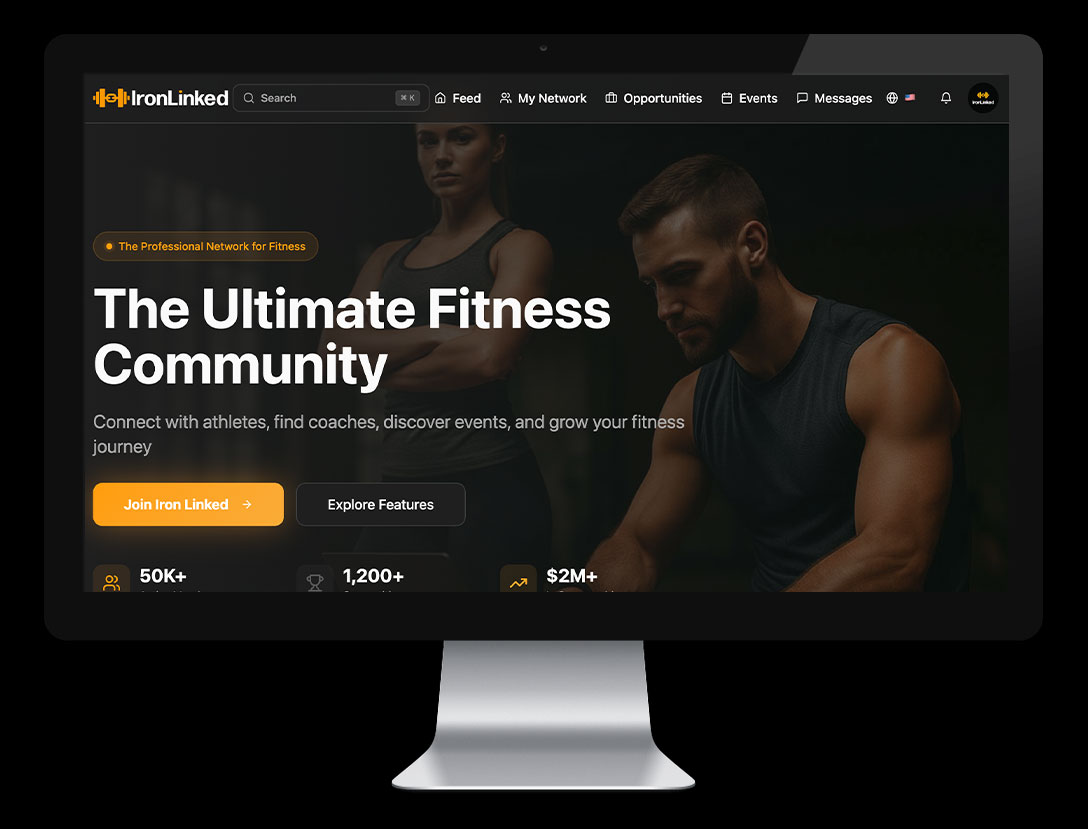
IronLinked is a professional networking platform created for athletes, coaches, brands, gyms and federations in the fitness and bodybuilding ecosystem. I led the full UX and product process, from problem definition and research to visual design, flows and the MVP launch.
Context & Role
Networking in the fitness world happens through fragmented channels, Instagram, DMs, scattered event pages and personal contacts. Athletes and industry professionals can feel isolated; your involvement can help build a more connected community.
IronLinked aims to solve this by becoming a focused professional network, a “LinkedIn for the fitness universe”, consolidating profiles, discovery, and events into one accessible platform for industry professionals.
Problem and Product Goals
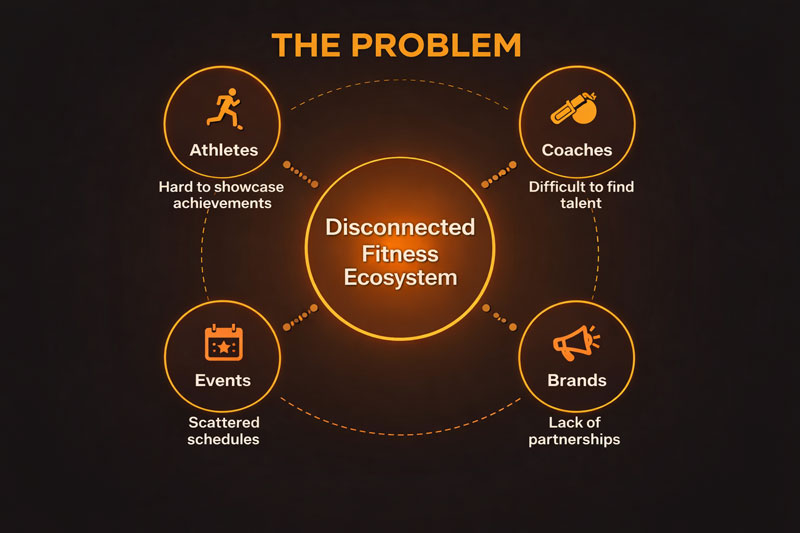
Problem
People in the fitness ecosystem lack a structured environment to connect and find opportunities. Existing social platforms are not designed for professional visibility, results tracking or event discovery.
Product goals
• Provide professional profiles focused on achievements, categories and roles
• Make it easy for athletes, coaches and brands to find each other
• Offer a centralised calendar for competitions and events
• Build an MVP that proves value before scaling
UX Approach
Learn Research
I conducted quick interviews and informal conversations with athletes, coaches and brand owners to understand
• How they discover people and events today
• Where they lose time and opportunities
• What information matters in a professional profile
Key Insights
• Instagram is widely used, but not ideal for professional networking
• Athletes want visibility, brands want filters and clarity
• Event information is scattered and inconsistent
• People want something simple, fast and organised
Structure
Based on these insights, I defined three core pillars
• Profiles
• Discovery and search
• Events and competitions
These became the foundation for the navigation and user flows.
Design and Key Flows
Core flows
I prioritised three essential journeys for the MVP
• A brand finds an athlete and initiates contact
• An athlete discovers upcoming competitions
• A federation adds an event to the platform
Wireframes to UI
Design highlights
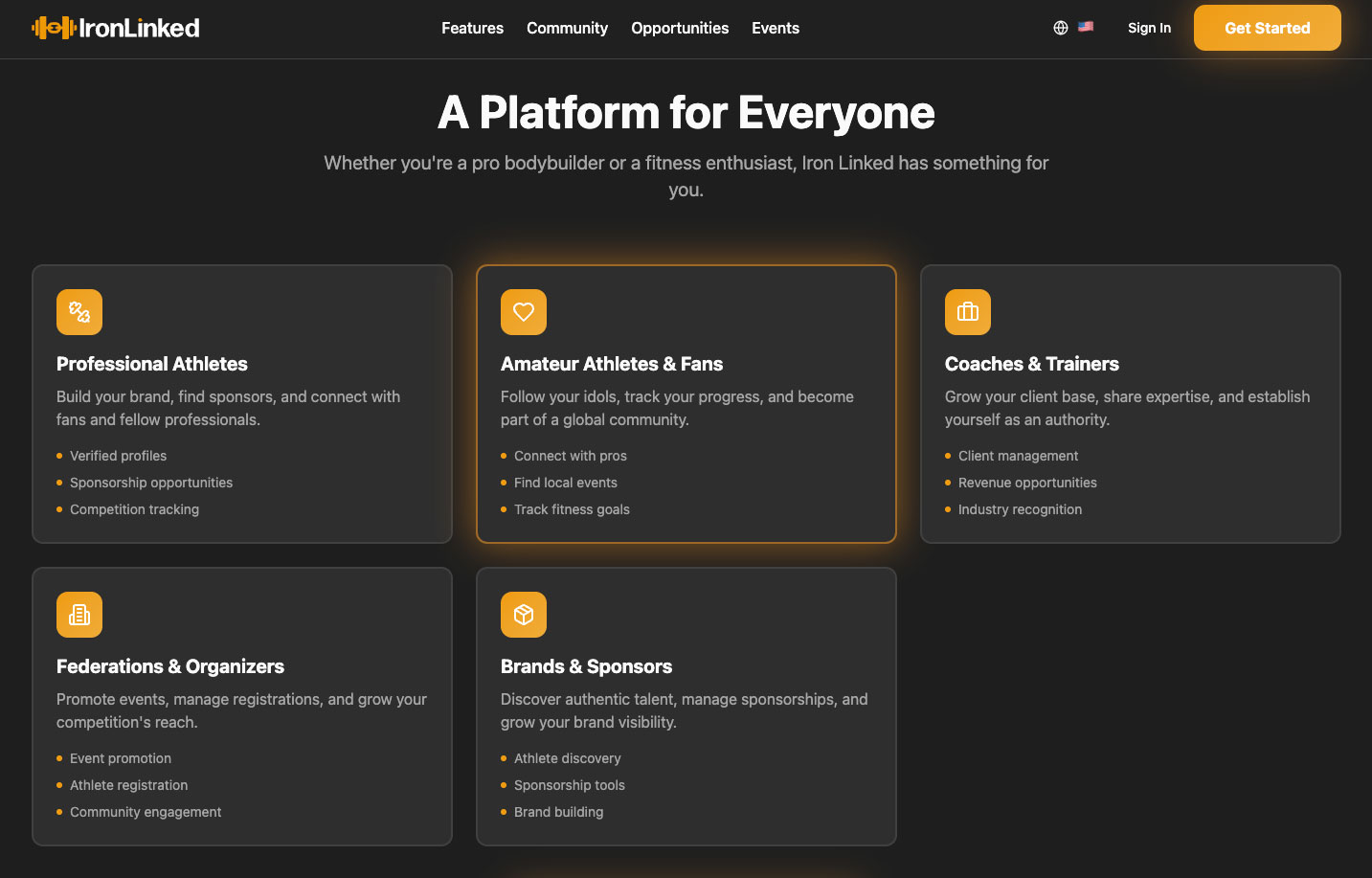
• Card based layout for profiles and events
• Clear CTAs and consistent components
• Simple, intuitive search and filtering
• Visual identity defined with logo, colours and typography built in Figma
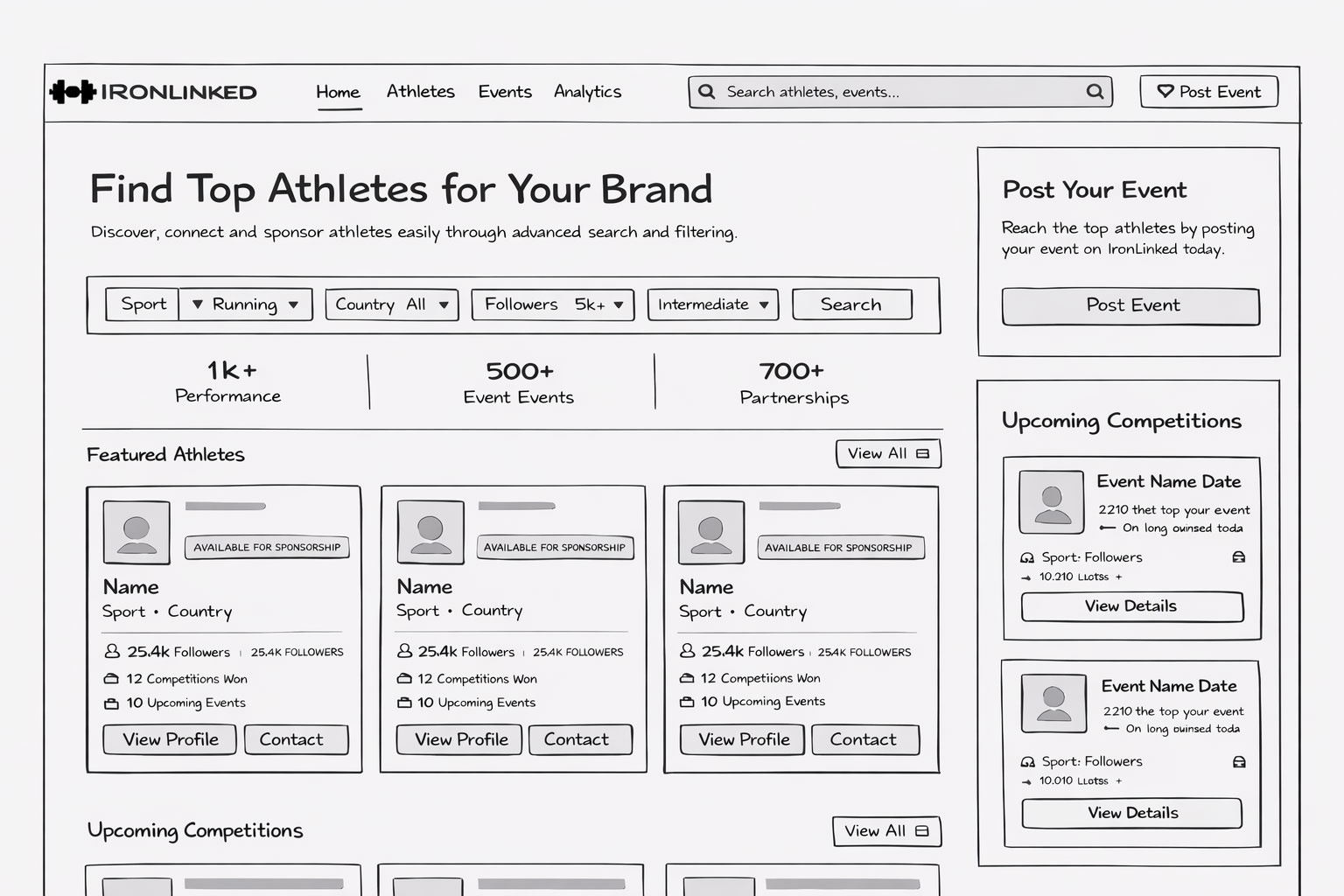
I created low fidelity wireframes to test hierarchy and layout, then moved into the final UI with a clean, bold and dark visual style aligned to the fitness world.
Building the MVP
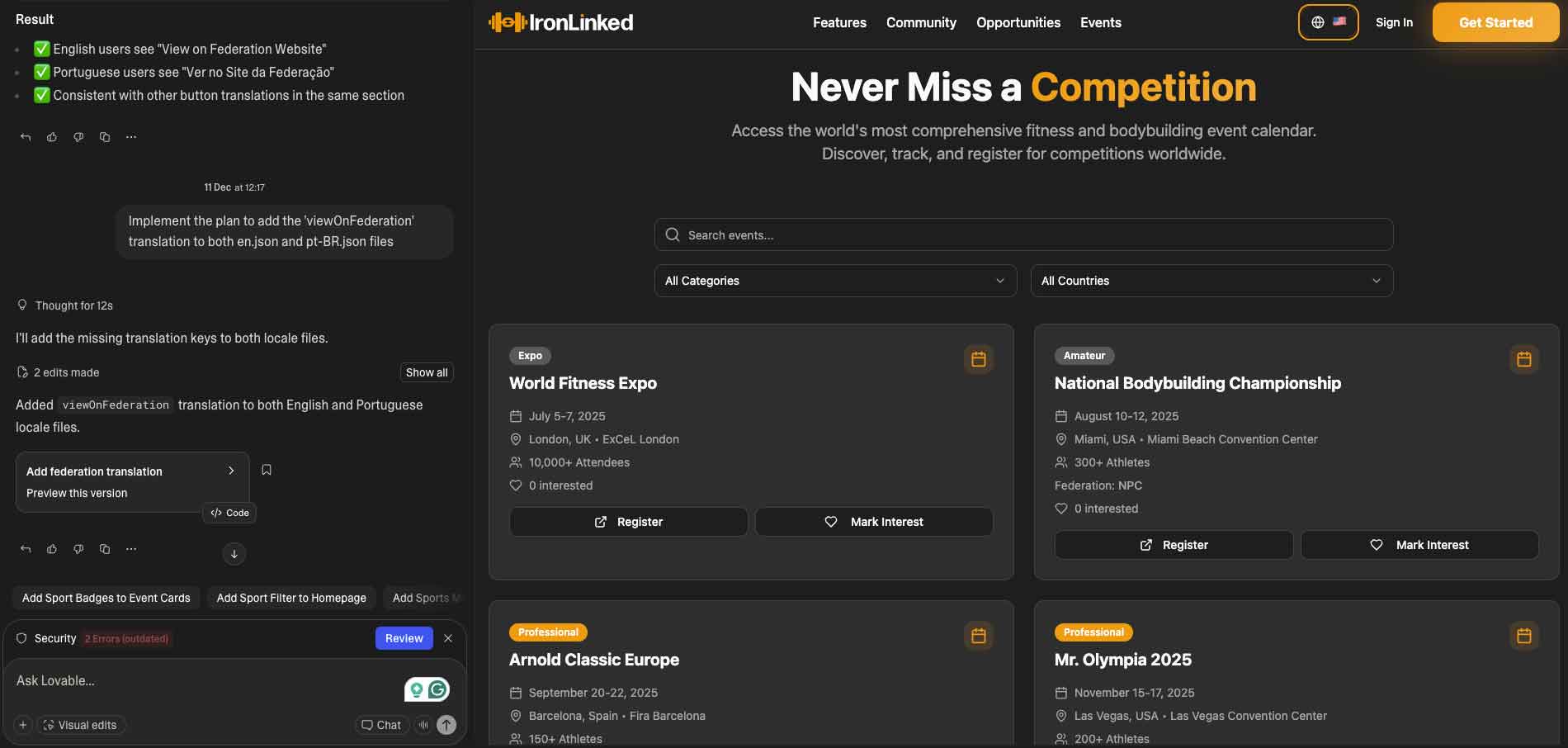
To accelerate delivery, I built the MVP using an AI driven no code tool.
I used prompts to describe screens and behaviours
I provided Figma mockups and a design system as visual guidance
I iterated quickly, adjusting layouts and components manually when needed
Launch and Early Results
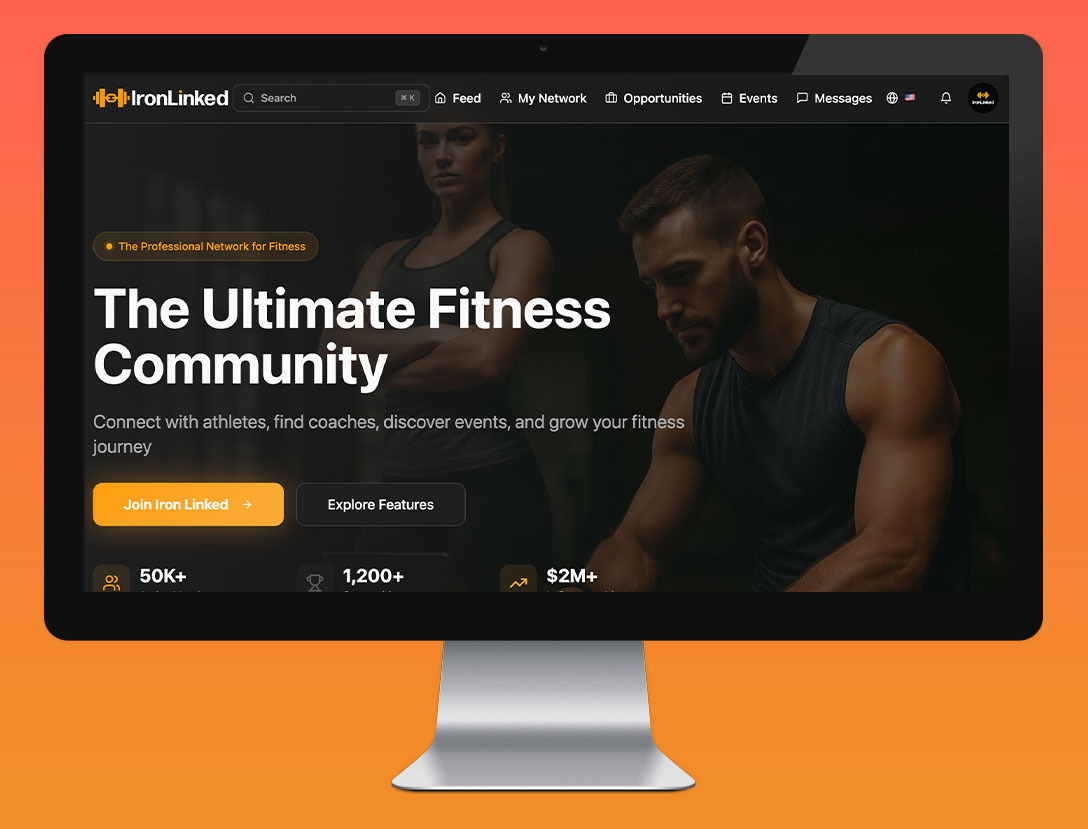
I launched the minimum viable product (MVP) and invited an initial group of athletes, coaches, and contacts from the fitness community to participate. I collected feedback from them through surveys, interviews, and usage data to better understand their needs and preferences. Based on this feedback, I made improvements to the platform and added new features to enhance the user experience. I continued iterating on the product, incorporating ongoing feedback and testing to ensure it met the needs of the target users.
Conclusion
IronLinked showcases my approach to user experience (UX) by identifying real problems, establishing a clear structure, validating with users, and delivering quickly. While the development is AI-accelerated and no-code, the UX strategy, workflows, and design decisions are entirely driven by design principles.