
UX - CASE STUDY - MOCKIT
From friction to one click.
Everyone with a product, website, or idea should have a great visual representation. Mockit was made for them, and for anyone who is tired of wasting time in Photoshop to get a quick mockup.

ROLE
Solo founder & designer
TIMELINE
3 months
PLATFORM
Browser-first, web app
STACK
React, tailwind, CSS
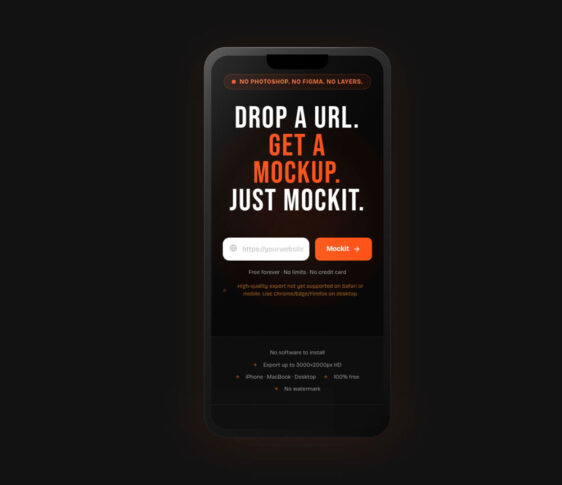
Mobile Device Mockup
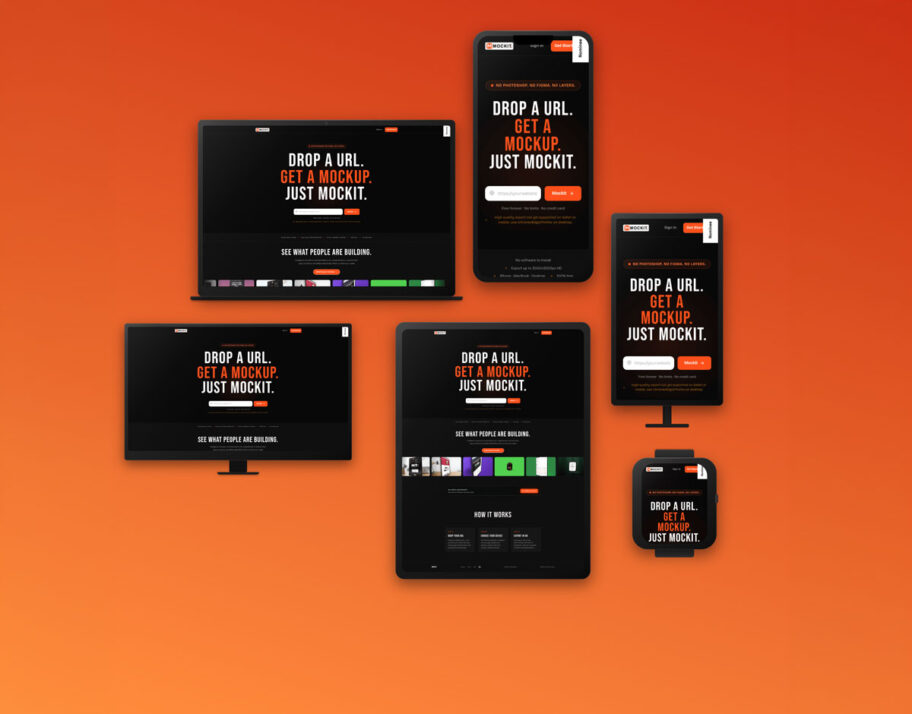
Devices
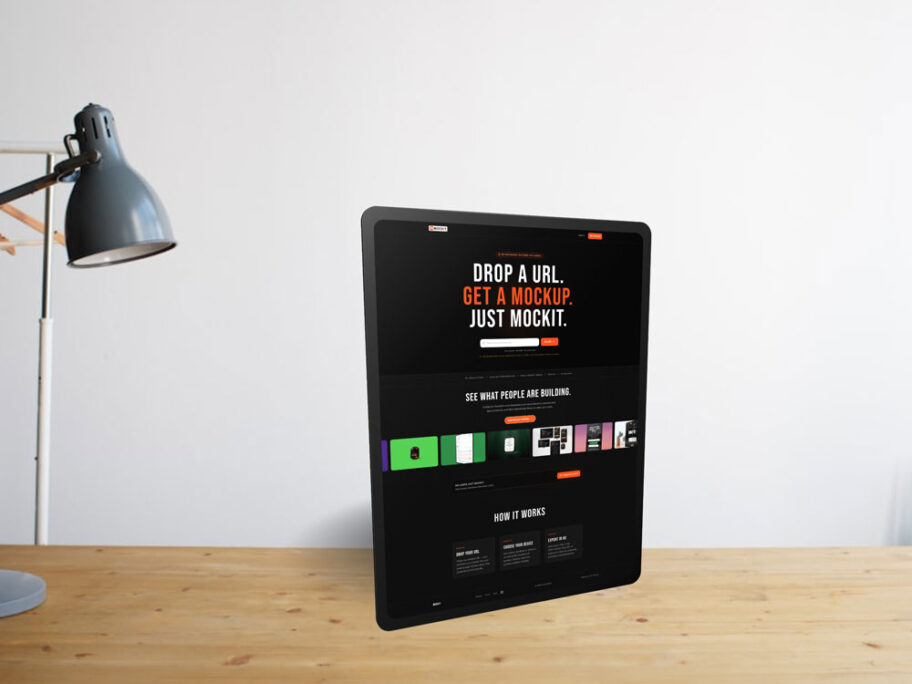
Mockit + Unsplash
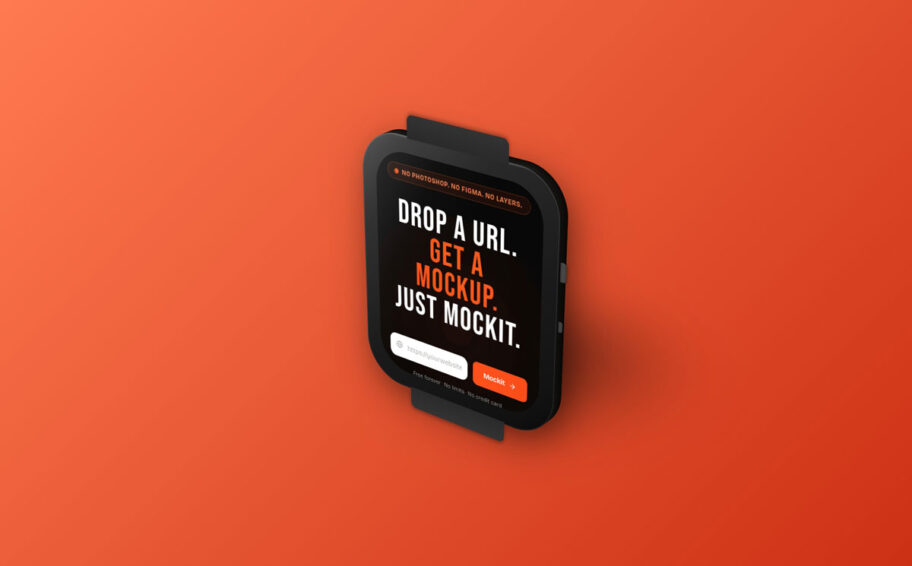
Apple Watch
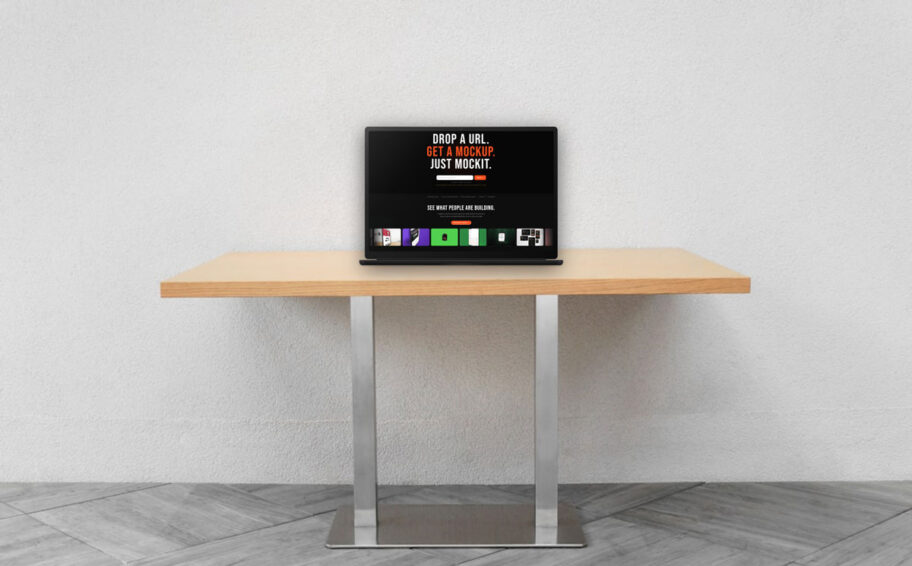
Laptop mockup device + Unsplash
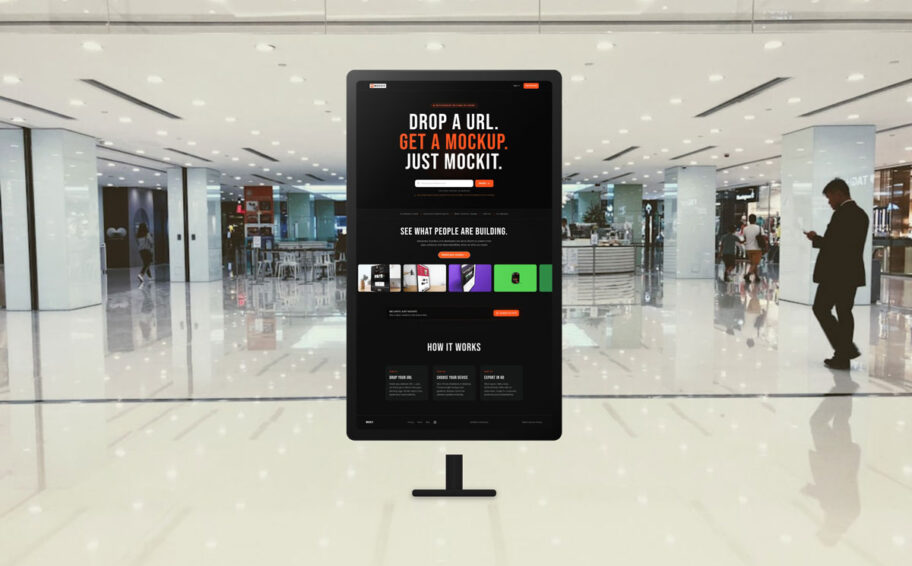
Kiosk Mockup
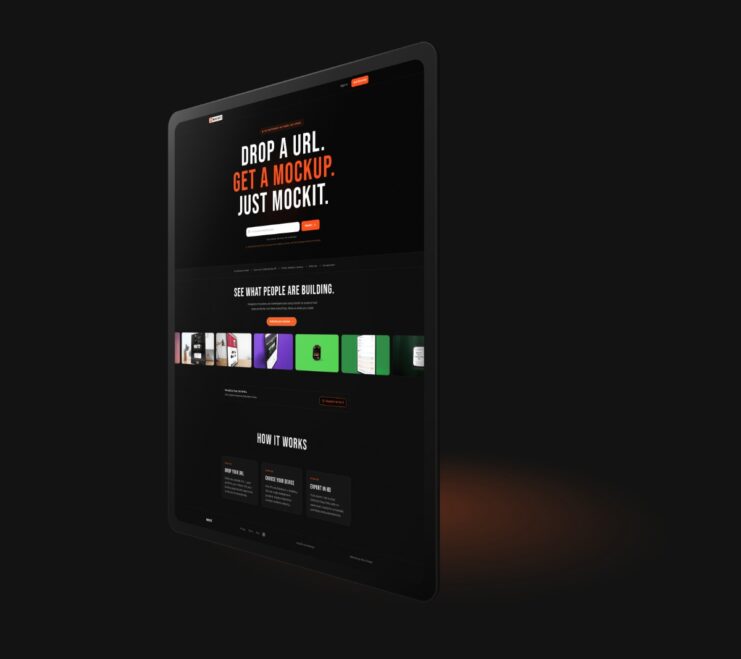
Tablet Device Mockup
THE PROBLEM
"The opportunity wasn't better design.
It was removing the process entirely."
Creating a device mockup used to mean a design degree, a paid plugin, and 40 minutes in Photoshop. Most people gave up before they started. That was the real problem.
01
40-step Photoshop workflows
Every template required opening PSD files, adjusting smart objects, fighting with layer groups, just to place a screenshot.
02
Illegal font dependencies
Community templates often shipped with unlicensed fonts. A workflow that broke on the first open, for legal reasons.
01
No tool for non-designers
Indie makers, founders, and developers needed quick mockups, but every tool assumed Figma or Photoshop expertise.
Strategy & Design Principles
Four principles that shaped every decision.
The path from idea to product was guided by constraints, not just features.
Each principle reflects a deliberate trade-off.
Perceived speed over raw speed
A progress indicator and optimistic UI made the app feel instant, even when WebGL rendering took 2–3 seconds. Users rated it "fast" in testing despite identical benchmark times to competitors.
→ Reduced perceived wait time by ~60%
One action at a time
Multi-step flows were killing conversion. I collapsed the UX into a single interaction: paste a URL, get a mockup. No accounts, no setup, no decisions before value.
→ From 6 steps to 1
Browser-first, no installs
Eliminating Figma plugin dependencies and desktop installs removed the biggest drop-off point. Zero friction before first value, the tool works the moment you land on it.
→ 100% of users reach the core feature
Premium aesthetics at every touchpoint
Fine-tuned motion, floating shadows, and responsive 3D — not because they were necessary, but because the product's value is appearance. The tool had to look as good as the mockups it created.
→ Most cited feature in user reviews
The Core Flow
Four steps. Zero friction.
The entire product experience was designed to deliver value before the user had to make any decision. This is the annotated flow.
1
Paste URL
Auto-screenshot captures the live page. No upload required.
Zero user effort
2
Pick device
6 device types: iPhone, Android, MacBook, iPad, and more.
One click selection
3
Customize
Adjust angle, background, and shadow in real-time 3D.
Instant preview
4
Export
PNG, JPG, or transparent background. Ready to publish.
No watermark
Built for Designers and Developers
Test responsivenes
Every device. One URL. No resizing windows.
Responsive web applications and websites are regularly checked by developers and web designers throughout the build process, but with Mockit, all of that comes together in one place.
Simply paste a live URL to instantly see how your site looks across desktop, tablet, and mobile, effortlessly and all at once.
No DevTools, browser resizing, or switching between viewport modes, just a clear, exportable visual of your product across the devices your users actually use.
This means a better client handoff artefact, a faster design review, and a sharper stakeholder presentation.
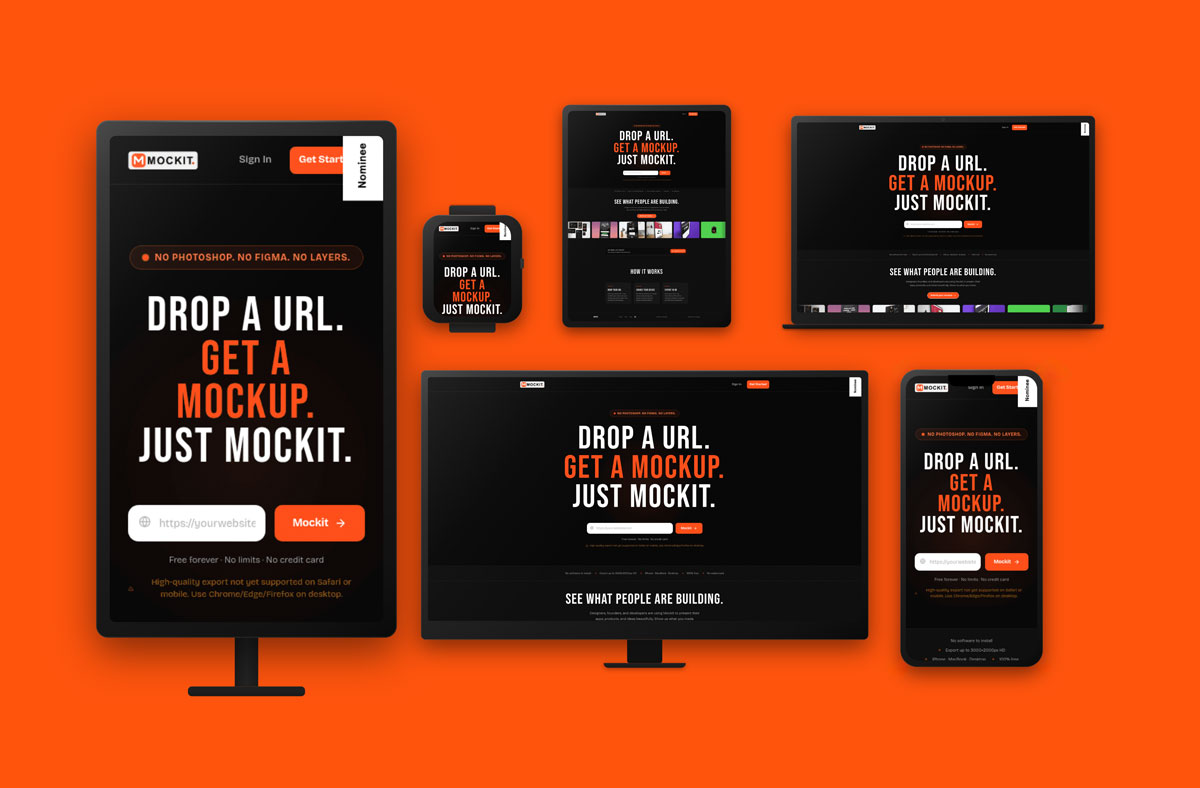
Design Decisions
What changed, and why.
The entire product experience was designed to deliver value before the user had to make any decision. This is the annotated flow.
User feedback
"I paste the URL and nothing happens for 3 seconds.
I thought it was broken."
Added a real-time rendering progress indicator
Users interpreted WebGL load time as a crash. Adding a frame-accurate progress bar, not a spinner, communicated that work was happening. Drop-off at this step went from 34% to 11%.
Retention · Perceived performance
Community research
Reddit's r/webdev surfaced that URL paste was "a step too far"
Users wanted to drag-and-drop their screenshot directly.
Introduced drag-and-drop as the primary input
Alongside URL paste, a drag zone now covers the full viewport on load. This matched users' existing mental models and reduced time-to-first-mockup from 47s to 12s on average.
Task completion - Mental model
Analytic insight
73% of users who exported once returned within 7 days.
But only 28% exported at all on first visit.
Moved the Export button above the fold, always visible
Export was buried behind a "customise" step. Promoting it to a persistent action bar, visible the moment a mockup renders, more than doubled first-session exports without cannibalising customisation usage.
Conversion - Information architecture
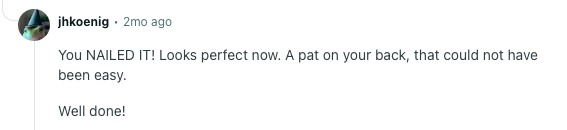
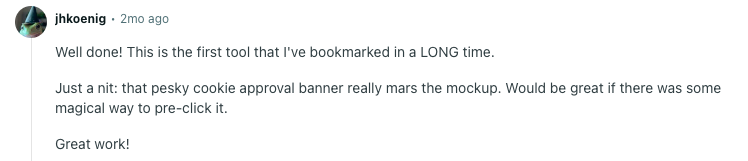




Reddit Screenshots
Results
Built in public. Validated in the wild.
ACTIVE USERS
2.8K
PAGEVIEWS/ MO
4.8K
IMPRESSIONS
27K
COUNTRIES
7+
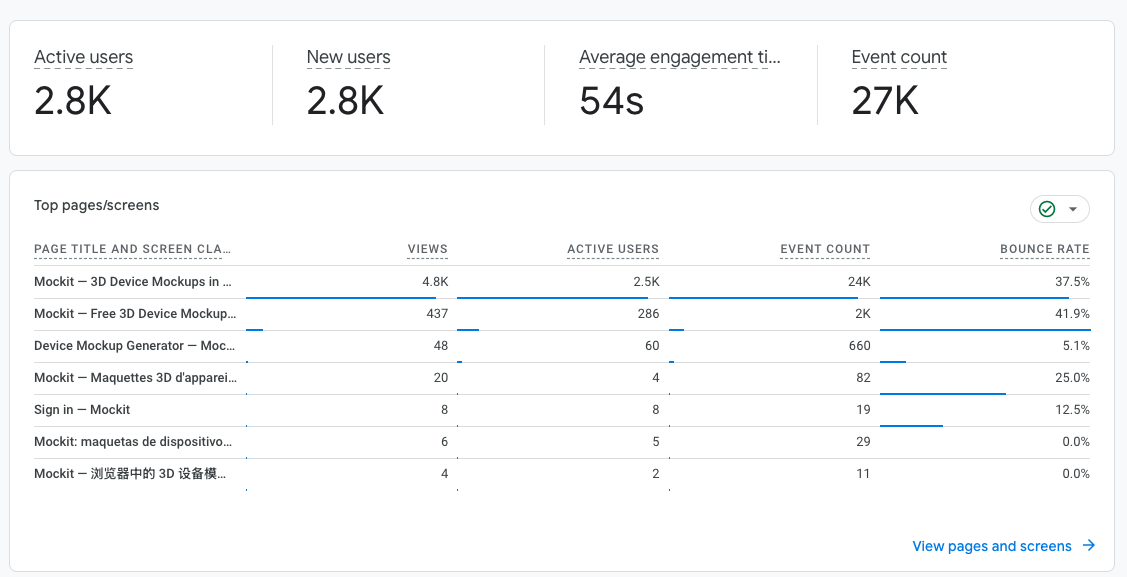
Google Analytics screenshot
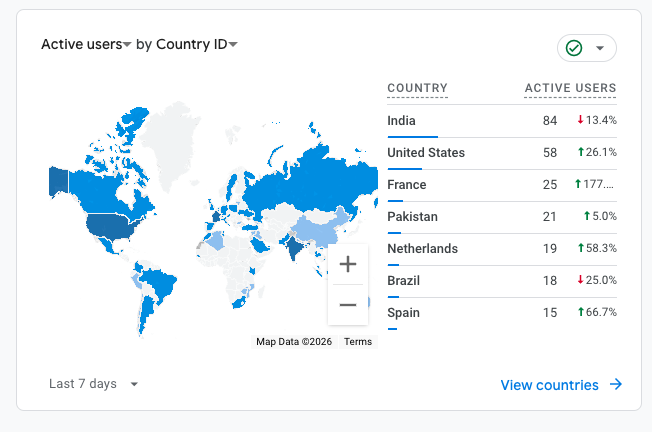
Google Analytics screenshot = List of Countries
Launched without a marketing budget, Mockit grew through product-led growth. Users sharing their mockups, with attribution.
Strongest traction in the Netherlands, Brazil, Spain, France and India. Organic reach driven entirely by users sharing their exports. The product is the distribution.
Learnings
01
Ship the smallest thing that proves the idea
Mockit launched with 3 devices and no customisation. The core insight: that UX-to-mockup was a real workflow, was validated before a single settings panel was built. Scope restraint is a design decision.
03
Performance perception is a UX problem, not an engineering one
The render time never changed. The user's experience of it changed completely. Through sequencing, feedback, and animation.
02
Community platforms are research tools, not just distribution
Reddit, Facebook and LinkedIn weren't just traffic sources, they were the highest-signal feedback channels. Every feature in v2 was pulled from a comment thread. Build publicly, listen publicly.
04
Every friction point is someone giving up on something they wanted
Removing the Photoshop workflow wasn't a UX improvement, it was restoring agency to people who'd already abandoned the goal. The best design work is often invisible: it's the step that used to stop someone.