


QuietMode - AAC support. Your way.
An adaptive communication tool designed to help autistic people and AAC users express themselves during moments when speaking becomes difficult. QuietMode focuses on fluctuating capacity, low cognitive load, and fast access to essential communication.
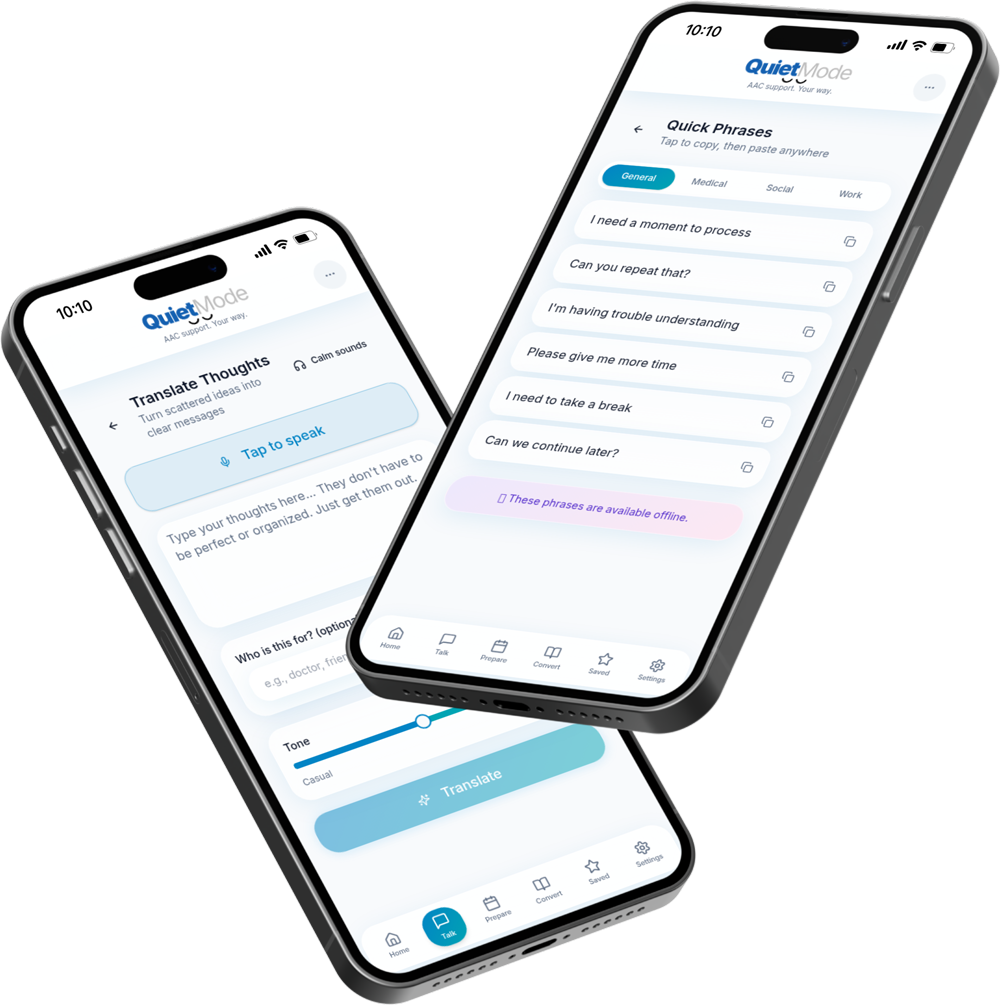
This project demonstrates
- Designing for fluctuating capacity
- Research with real AAC users and specialists
- Reducing cognitive load under stress
- Ethical, accessibility-first product thinking.
View prototype: https://quietmode.lovable.app
My Role:
Product Designer & UX lead
Plataform:
Early-stage MVP (ongoing)Web App (Future: mobile)
Timeline:
Early-stage MVP (ongoing)
Focos
Early-stage MVP (ongoing)Web App (Future: mobile)Accessibility & Calm Design
Research Inputs
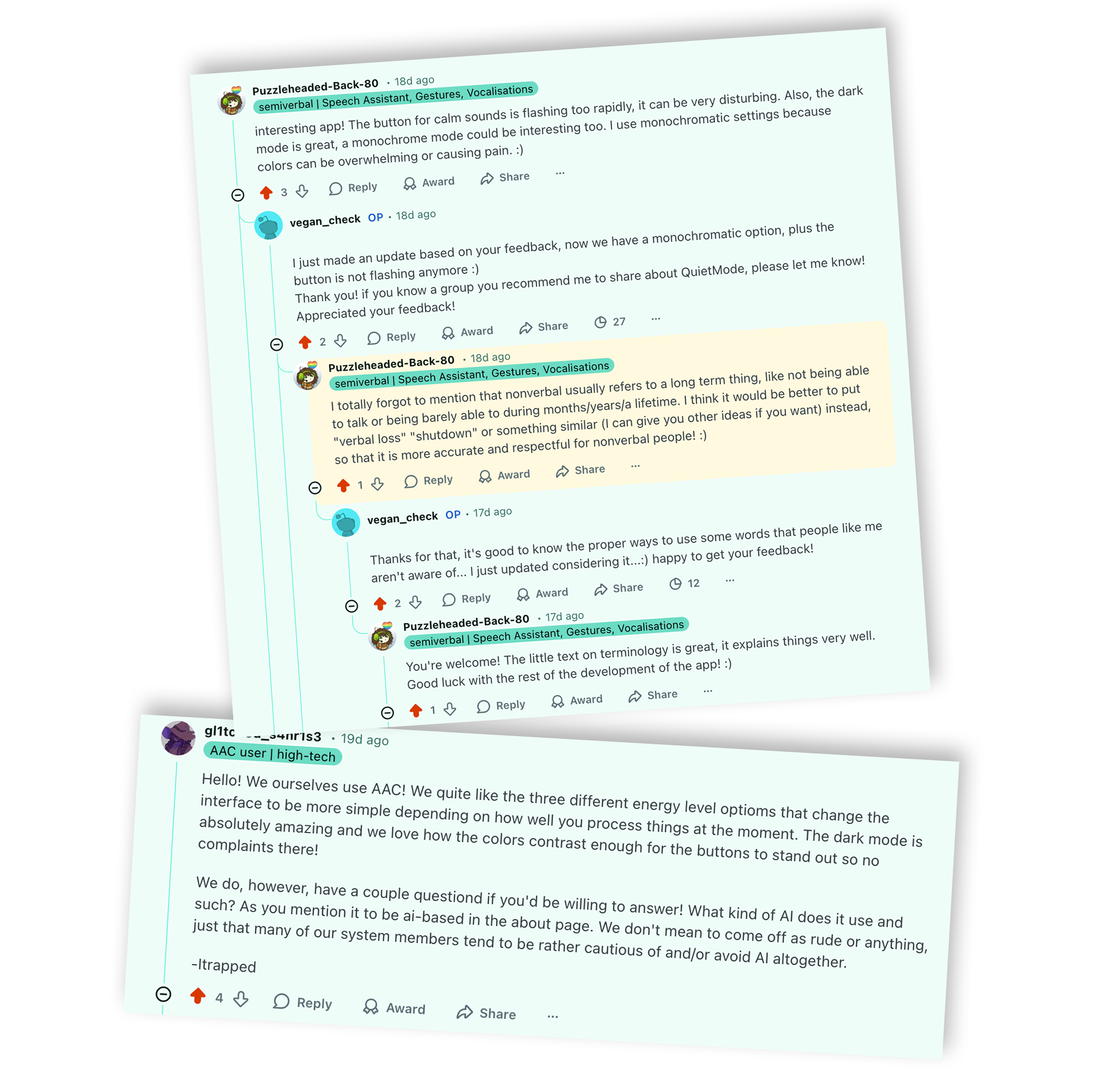
QuietMode was shaped through direct involvement from the people it is intended to support.
Research and validation included:
- Online 1:1 interviews with autistic users and AAC users
- Engagement with targeted AAC and neurodivergent communities
- Continuous feedback loops during development
- Validation and review with AAC specialists
Research focused on real-world communication breakdowns rather than ideal or clinical scenarios, ensuring the product addressed lived experiences instead of assumptions.

Experience QuietMode
The Problem
Many AAC tools work well in theory but fail in moments of stress, shutdown, or low energy.
They often require too much effort exactly when users have the least capacity to give it.
The challenge was not enabling communication.
The challenge was reducing effort at the moment communication matters most.
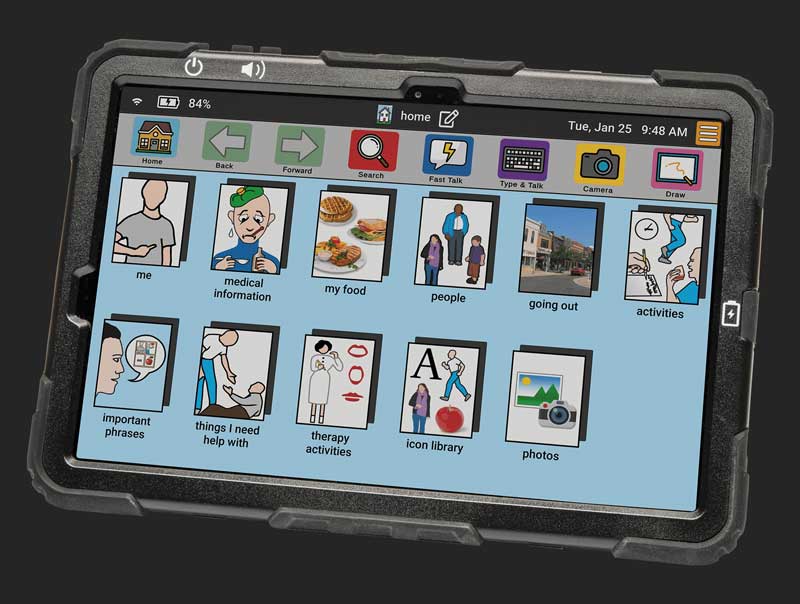
Tradicional AAC Devices
QuietMode
Key UX Decision
Designing for fluctuating capacity
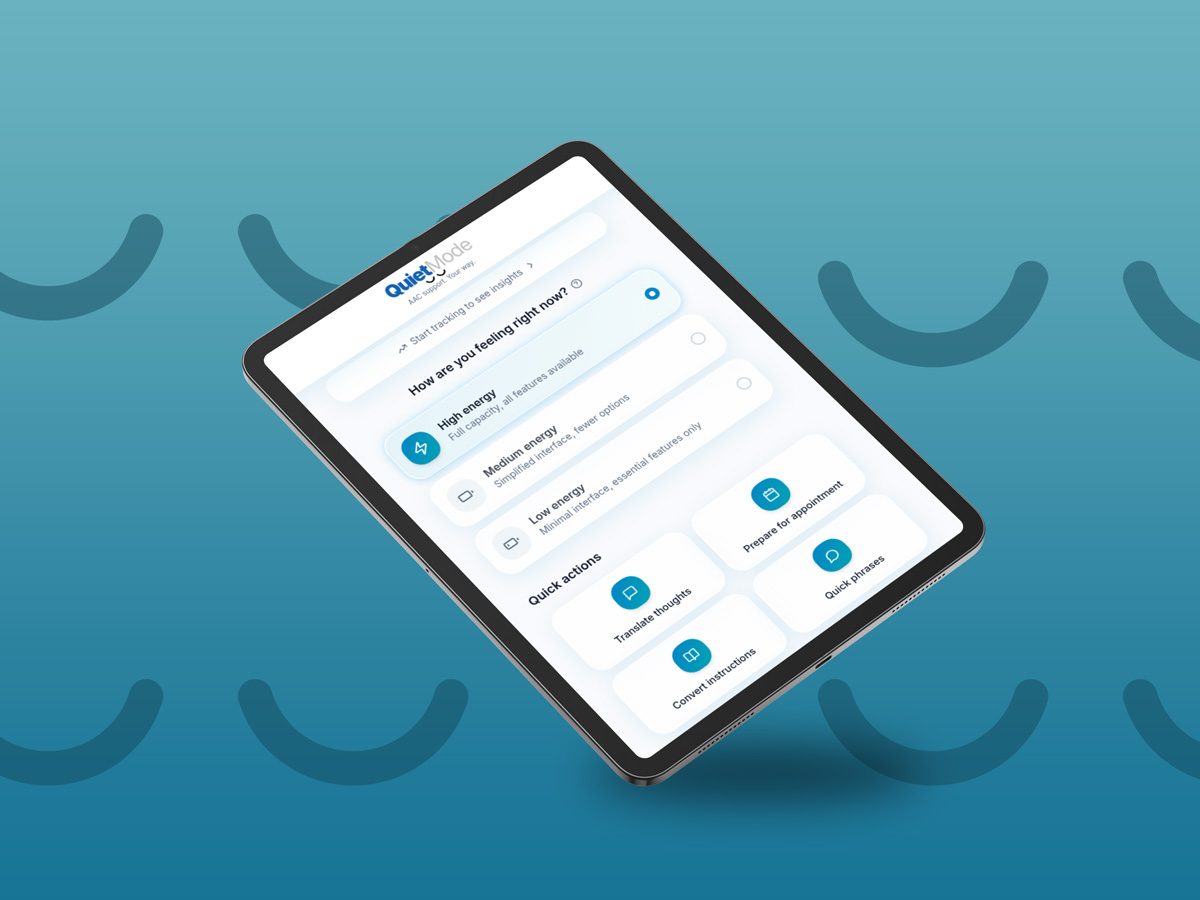
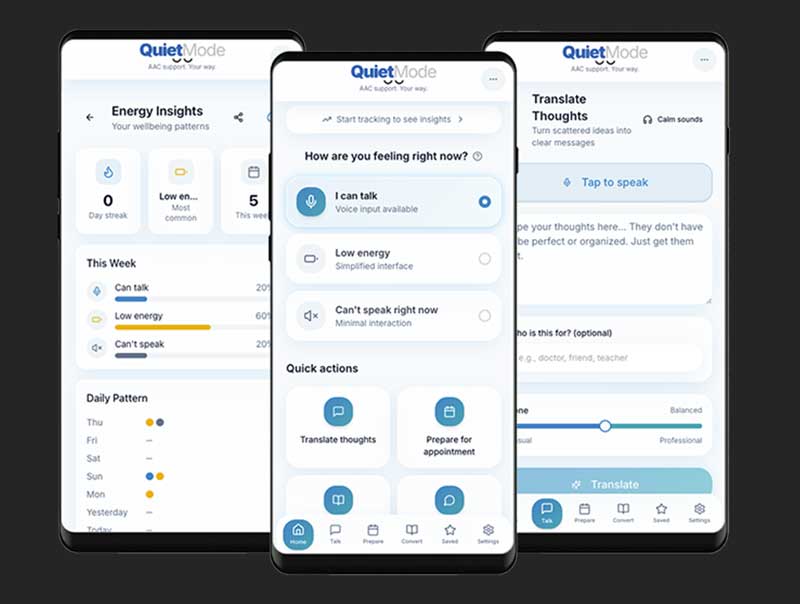
Users explicitly choose how they feel in the moment, such as high, medium, or low energy. This choice dynamically adapts the interface, interaction density, and available actions.
The product responds to the user’s current capacity instead of assuming a fixed state.
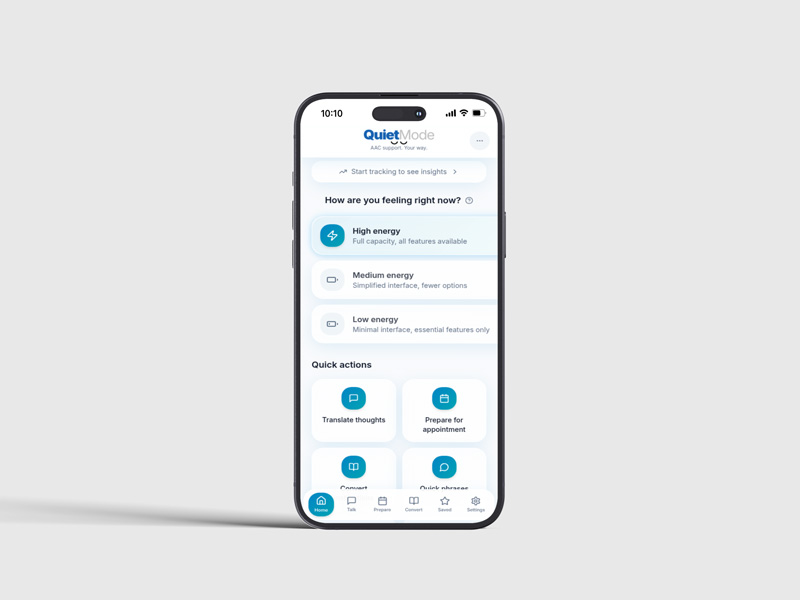
Designing for fluctuating capacity is a core challenge.
Users' abilities vary throughout the day, making consistent assumptions risky.
Speed Over Complexity
In high-stress moments, speed matters more than customisation.
QuietMode prioritises fast access to meaningful communication over deep configuration. Most core actions are reachable in one or two taps.
Customisation exists, but never blocks immediate use.
Preparation reduces anxiety
User research highlighted that anxiety often increases before appointments or unfamiliar interactions. QuietMode includes structured preparation flows that help users externalise thoughts, symptoms, and questions ahead of time.
This reduces working memory load and increases predictability during real-world interactions.
Patterns without judgment
QuietMode surfaces communication and energy patterns over time in a calm, non-judgmental way.
Insights are designed to support self-awareness and shared understanding, not performance tracking or pressure.
This is especially useful when communicating with caregivers, therapists, or clinicians.
Accessibility and Interface
The project emphasized designing for real constraints over idealized users.
It showed how tools can fail when cognitive effort is underestimated and how feedback prevents designing in isolation.
QuietMode is evolving, with early validation confirming the value of adaptive interfaces based on capacity rather than consistency.
Outcomes and Learnings
This project reinforced the importance of designing for real constraints rather than ideal users.
It showed how quickly accessibility breaks down when cognitive load is underestimated, and how continuous feedback prevents designing in isolation.
QuietMode is still evolving, but early validation confirms the value of adaptive interfaces that respect fluctuating capacity.
What's Next
Next steps focus on continued validation with AAC users and specialists, expanding phrase and preparation libraries through community input, exploring optional text-to-speech, and moving toward native iOS and Android.
Personalisation will be refined carefully, keeping the experience simple and low-effort.